




 Lab Lunch at College Town Bagels on 1st May
 First day in the new lab, 28 January 2024


Publication
September 30th, 2014
Chaston JM*, Newell PD* and Douglas AE, 2014. Metagenome-wide association of microbial determinants of host phenotype in Drosophila melanogaster. MBio Sep 30;5(5). pii: e01631-14. Pubmed
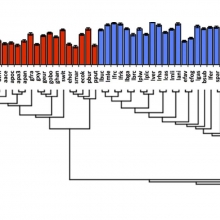 Animal-associated bacteria (microbiota) affect host behaviors and
physiological traits. To identify bacterial genetic determinants of
microbiota-responsive host traits, we employed a metagenome-wide
association (MGWA) approach in two steps. First, we measured two
microbiota-responsive host traits, development time and triglyceride
(TAG) content, in Drosophila melanogaster flies monoassociated with each
of 41 bacterial strains. The effects of monoassociation on host traits
were not confined to particular taxonomic groups. Second, we clustered
protein-coding sequences of the bacteria by sequence similarity de novo
and statistically associated the magnitude of the host trait with the
bacterial gene contents. The animals had been monoassociated with
genome-sequenced bacteria, so the metagenome content was unambiguous.
This analysis showed significant effects of pyrroloquinoline quinone
biosynthesis genes on development time, confirming the results of a
published transposon mutagenesis screen, thereby validating the MGWA; it
also identified multiple genes predicted to affect host TAG content,
including extracellular glucose oxidation pathway components. To test
the validity of the statistical associations, we expressed candidate
genes in a strain that lacks them. Monoassociation with bacteria that
ectopically expressed a predicted oxidoreductase or gluconate
dehydrogenase conferred reduced Drosophila TAG contents relative to the
TAG contents in empty vector controls. Consistent with the prediction
that glucose oxidation pathway gene expression increased bacterial
glucose utilization, the glucose content of the host diet was reduced
when flies were exposed to these strains. Our findings indicate that
microbiota affect host nutritional status through modulation of nutrient
acquisition. Together, these findings demonstrate the utility of MGWA
for identifying bacterial determinants of host traits and provide
mechanistic insight into how gut microbiota modulate the nutritional
status of a model host.
IMPORTANCE:To understand how certain gut bacteria promote the health of their animal hosts, we need to identify the bacterial genes that drive these beneficial relationships. This task is challenging because the bacterial communities can vary widely among different host individuals. To overcome this difficulty, we quantified how well each of 41 bacterial species protected Drosophila fruit flies from high fat content. The genomes of the chosen bacterial strains were previously sequenced, so we could statistically associate specific bacterial genes with bacterially mediated reduction in host fat content. Bacterial genes that promote glucose utilization were strongly represented in the association, and introducing these genes into the gut bacteria was sufficient to lower the animal's fat content. Our method is applicable to the study of many other host-microbe interactions as a way to uncover microbial genes important for host health.